

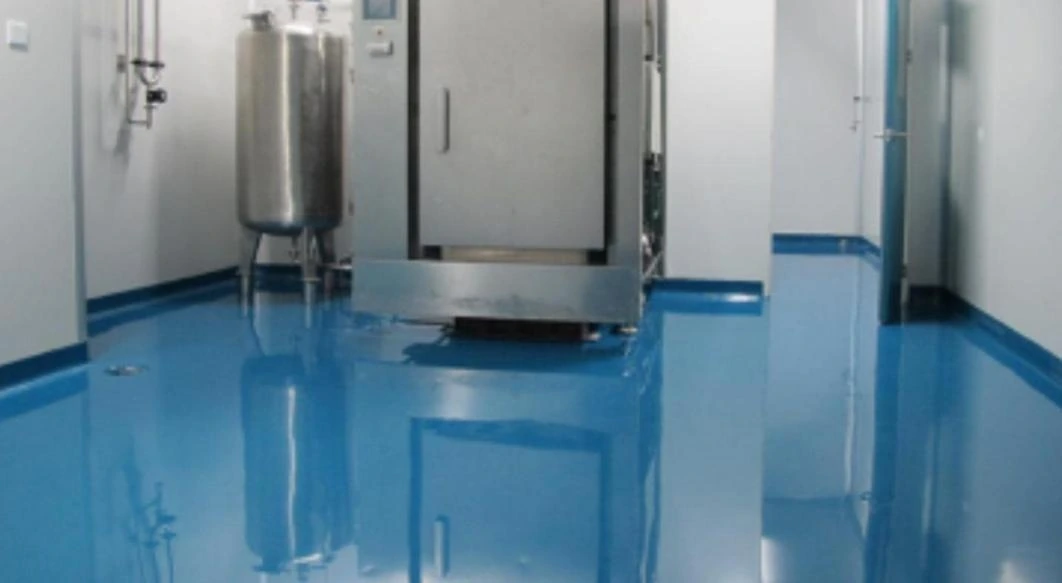
MP1 / MP13 / TW34
Clean & self-leveling
Self-leveling epoxy, ESD flooring, and cleanroom wall and ceiling coatings.
Select for hygiene, static control and wall-to-floor details.
Explore systemGTA Resin Flooring Systems
Twelve GTA products of our own — self-leveling, floor coatings, polyurethane, anti-corrosion, wall & ceiling and inorganic floor systems. Data sheets, method statements and project references are available for every product.
PRODUCTS / SYSTEM SELECTION
Technical suitability, cost and system compatibility guide selection for hygiene, wear, cleaning and renovation.
MP1 / MP13 / TW34
Self-leveling epoxy, ESD flooring, and cleanroom wall and ceiling coatings.
Select for hygiene, static control and wall-to-floor details.
Explore system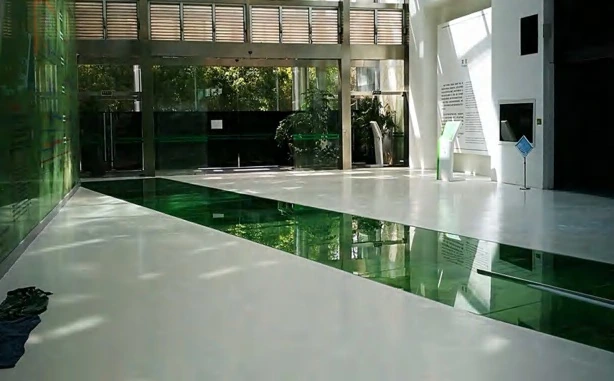
JQ250 / J52
Self-leveling polyurethane and polyurethane finish systems.
Specify the build-up for cleaning, temperature changes and chemical exposure.
Explore system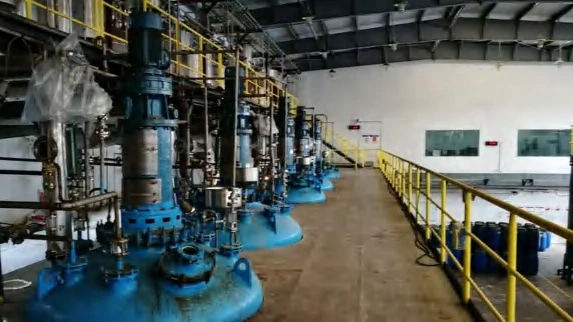
WJ919
Inorganic composite anti-corrosion coatings and associated systems.
Check the medium, concentration, temperature and type of contact.
Explore system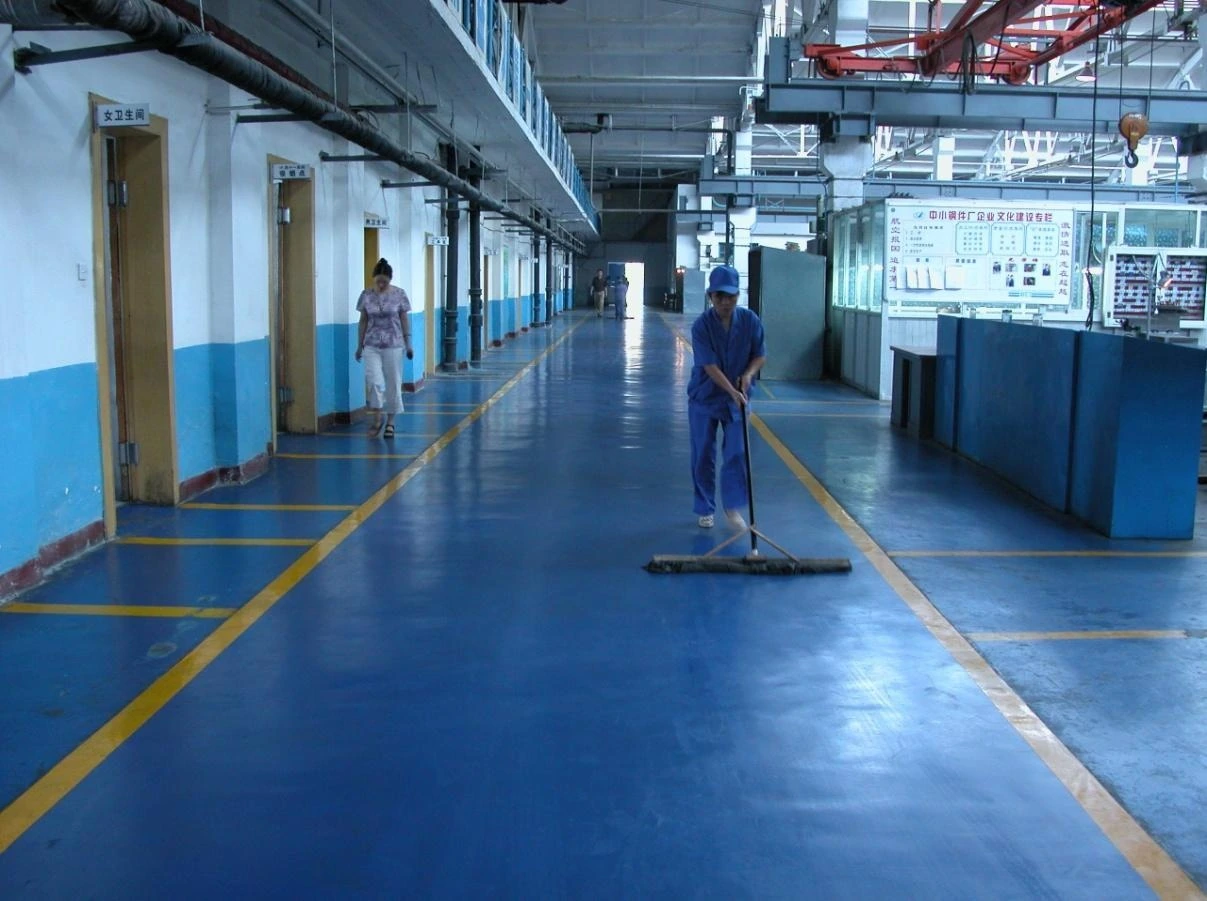
JP910 / HP900
Fast-curing and solvent-free epoxy flooring materials.
Assess existing coatings, substrate condition and the available work window.
Explore systemEpoxy Self-leveling Systems
Solvent-free epoxy self-leveling floor — seamless, smooth and easy to clean, built for cleanrooms in pharmaceutical, food and other hygiene-critical industries.
Shenzhen Neptunus Pharmaceutical — powder injection cleanroom
Build-up: concrete substrate / epoxy primer / epoxy body coat / self-leveling top coat (diagram labels in Chinese)
MP1 is a high-solids, two-component, room-temperature-curing high-build floor resin. Since its launch in the late 1990s it has been widely used in pharmaceutical, food, automotive, car park and electronics facilities.
It resists chemicals, salt, weak acids and alkalis, and is oil-, water-, moisture- and dust-proof — a seamless, smooth and tough finish. The top coat is applied by skilled trowel hands to guarantee appearance and quality.
Technical data
| Gloss | 80 – 100 |
|---|---|
| Compressive strength | ≥ 85 MPa |
| Flexural strength | ≥ 35 MPa |
| Tensile strength | ≥ 7 MPa |
| Impact resistance | ≥ 50 kg·cm |
| Abrasion loss (750 g / 1000 rev) | ≤ 0.002 g |
| Adhesion | Class 1 |
| Pencil hardness | ≥ 2H |
| 10% H₂SO₄, 20 days | No visible change |
| 20% NaOH, 20 days | No visible change |
| Gasoline, 30 days | No visible change |
| Water, 30 days | No visible change |
| Touch dry (25 ℃) | ≤ 5 h |
| Hard dry (25 ℃) | ≤ 168 h |
Application sequence
Related projects
Epoxy Self-leveling Systems
A conductive copper grid and grounding system are built into the epoxy self-leveling floor to dissipate static continuously — for electronics assembly, data rooms and explosion-protected workshops.
Yunnan Yuntianhua — POM explosion-proof workshop
MP13 is based on MP1 epoxy self-leveling, combined with conductive epoxy, a copper grid and a static grounding system, so the whole floor forms a reliable discharge path.
We have installed ESD floors since 1994, including the Yuntianhua POM explosion-proof workshop, Guodian Nanjing Automation, China Telecom and China Mobile data rooms, and Shanghai Sinyang Semiconductor Materials.
Technical data
Surface and volume resistance are designed to project requirements; every zone is tested and recorded at handover.
Application sequence
Related projects
Epoxy Self-leveling Systems
Clear solvent-free epoxy mixed with colored quartz and power-troweled into a strong, textured floor — with coved skirting for a seamless wall-to-floor finish.
Hefei Yimin Pharmaceutical — colored-quartz floor with coved skirting
Build-up: epoxy primer / epoxy colored quartz / MP11 grout coat (diagram labels in Chinese)
MP11 clear epoxy resin was developed specifically for colored-quartz floors: high-solids, two-component, room-temperature curing, close to 100% resin, solvent-free and odorless. Both components are water-white, so the quartz colors show true.
Colored-quartz floors are seamless, wear-resistant and easy to clean — suited to pharmaceutical and food cleanrooms as well as high-end public areas. Dry-mix quartz can be laid up to 10 mm in a single pass.
Technical data
| Composition | Clear epoxy resin + colored quartz |
|---|---|
| Resin | Two components; close to 100% resin |
| Dry-mix thickness reference | 5-10 mm |
| Concrete strength | C30 or above |
| Substrate moisture | ≤ 6% |
| Ambient / floor temperature | > 15 ℃ |
| Relative humidity | < 65% |
| Packaging (resin) | A 16 kg + B 8 kg |
Application sequence
Related projects
Material and process references: 2017-06-05 data sheet and 2017-06-12 installation guide. The inconsistent final-page physical-property table is not used.
Epoxy Floor Coatings
Low-VOC, high-solids, two-component epoxy floor coating — easy to apply and widely used; the economical choice for plants, warehouses and car parks.
Shanghai Pudong International Airport — Energy Center
Build-up: concrete / epoxy primer / epoxy mortar body coat / epoxy top coat (diagram labels in Chinese)
HP900 is a low-VOC floor product developed for cleanrooms in hygiene-critical industries such as pharmaceuticals and food processing, used to finish and renovate concrete floors.
Smooth and colorful, tough, wear-resistant and easy to clean; resistant to chemicals, salt, weak acids and alkalis; oil-, water-, moisture- and dust-proof. Can be brushed, rolled or sprayed.
Technical data
| Gloss | 80 – 100 |
|---|---|
| Coverage | 220 – 250 g/㎡ |
| Compressive strength | ≥ 75 MPa |
| Flexural strength | ≥ 35 MPa |
| Tensile strength | ≥ 7 MPa |
| Impact resistance | ≥ 50 kg·cm |
| Abrasion loss (750 g / 1000 rev) | ≤ 0.02 g |
| Adhesion | Class 1 |
| Pencil hardness | ≥ 2H |
| 10% H₂SO₄, 20 days | No visible change |
| 20% NaOH, 20 days | No visible change |
| Gasoline, 30 days | No visible change |
| Water, 30 days | No visible change |
| Touch dry (25 ℃) | ≤ 5 h |
| Hard dry (25 ℃) | ≤ 168 h |
Application sequence
Related projects
Epoxy Floor Coatings
Fast-curing epoxy floor coating. After milling or shot blasting, old floors are renewed quickly — ideal for renovating plants that stay in production.
Xi'an Aero-Engine Plant — after renovation (30,000 m²)
The original concrete floor before renovation
For dusting, cracked, delaminating or powdering floors, we first assess substrate strength, hollow spots and cracks, then remove weak layers by milling or shot blasting, repair and level, and finally apply JP910.
JP910 cures fast, so work can be phased by zone and time slot to minimize disruption. References include the Xi'an Aero-Engine Plant (30,000 m²), Sumitomo Rubber Changshu (30,000 m²) and COFCO Nissin Foods (North China).
Technical data
Technical data sheet available on request.
Application sequence
Related projects
Polyurethane Systems
A solvent-free polyurethane mortar system with primer, self-leveling mortar and top coats, selected to suit the operating conditions.
SAIC New Energy Showroom
JQ250 combines primer, polyurethane mortar and a compatible top coat. Steam cleaning, thermal exposure and chemical resistance must be assessed against thickness, temperature, concentration and contact time. The historical data sheet does not state complete test conditions; it is not an unconditional temperature or comparative service-life guarantee.
Technical data
| Thickness | 1 – 3 mm |
|---|---|
| Solids content | 100% |
| Dry film thickness | 1000 μm |
| Theoretical consumption | 1100 g/㎡ |
| Flash point | 38 ℃ |
| Touch dry (25 ℃) | ≤ 30 min |
| Hard dry (25 ℃) | 4 h |
| Full cure | 7 d |
| Recoat interval (above 15 ℃) | 15 min – 48 h |
Application sequence
Related projects
Polyurethane Systems
A solvent-free polyurethane anti-corrosion coating for floors, tanks, pipelines and structures. Thickness and chemical exposure are confirmed for each application.
Chemical plant application reference; not an identified GTA project
Select J52 with reference to the substrate, corrosive media, design film thickness and application method. The historical data sheet contains differing temperature ranges; installation conditions require technical confirmation. No blanket service-life guarantee is made.
Technical data
| Solids content | 100% |
|---|---|
| Dry film thickness | 1000 μm |
| Consumption (floors) | 2500 g/㎡ |
| Consumption (vertical) | 1100 g/㎡ |
| Flash point | 38 ℃ |
| Touch dry (25 ℃) | ≤ 30 min |
| Hard dry (25 ℃) | 4 h |
| Full cure | 7 d |
| Steel surface preparation | Sa 2.5, profile 25 – 100 μm |
Application sequence
Chemical & corrosion protection
Inorganic composite anti-corrosion coating and associated protection for chemical environments. Confirm medium type, concentration, temperature and contact conditions when choosing the system.
Anti-corrosion & Wall Coatings
A wall and ceiling coating used alongside flooring systems in clean production spaces.
Shuanghui Slaughterhouse, Dezhou — walls and ceilings
TW34 complements floors and coves in clean production spaces. Historical applications include Shuanghui and Shanghai Liangyou Food. Antibacterial, mold-resistance, scrub-resistance and VOC properties require product-specific documentation and complete reports.
Technical data
Technical data sheet available on request.
Application sequence
Related projects
Inorganic Floor Systems
A waterborne inorganic-composite coating system for sealing and dust-proofing concrete. Reaction to fire must be checked against the applicable complete report.
WJ900 application
Build-up: concrete / sealing primer / waterborne color coat / sealing top coat (diagram labels in Chinese)
WJ900 consists of sealing primer, color coat and top coat. Historical report Zb201422104, dated 2015-02-12, states “GB 8624 B1 (A-s1, t1)”. The result applies to the submitted sample. Confirm the complete report, supplied product and construction build-up for each project.
Technical data
| Gloss | 60 – 80 |
|---|---|
| Coverage | 220 – 250 g/㎡ |
| Compressive strength | ≥ 65 MPa |
| Flexural strength | ≥ 35 MPa |
| Tensile strength | ≥ 7 MPa |
| Impact resistance | ≥ 50 kg·cm |
| Abrasion loss (750 g / 1000 rev) | ≤ 0.02 g |
| Adhesion | Class 1 |
| Pencil hardness | ≥ 2H |
| Touch dry (25 ℃) | ≤ 2 h |
| Hard dry (25 ℃) | ≤ 168 h |
| Reaction to fire | Historical report Zb201422104: GB 8624 B1 (A-s1, t1); verify applicability |
Application sequence
Test reports · National Fire Equipment Quality Supervision & Testing Center
Inorganic Floor Systems
A cementitious floor system sealed with reactive nano-silica, forming a dense glaze-like protective layer — wear-resistant, impermeable, oil-proof and easy to clean.
How nano-silica seals and densifies concrete
At ambient temperature, reactive nano-silica (10 – 50 nm) penetrates the concrete and combines with calcium hydroxide to form strong C-S-H, filling capillary pores; silica remaining at the surface reacts with itself to form a dense protective layer.
Suitable for terrazzo, dry-shake hardener floors, cementitious self-leveling and refractory concrete — in cold stores, food plants, oil-exposed workshops and outdoor areas.
Technical data
Technical data sheet available on request.
Application sequence
Inorganic Floor Systems
Concrete is ground step by step, densified with lithium silicate and high-speed polished — giving a hard, wear-resistant, dust-free inorganic floor with controllable gloss.
Finished lithium silicate polished floor
Step-by-step grinding
Lithium silicate is highly reactive with a near-neutral pH. It penetrates concrete and reacts with loose silicates to form new crystals, sealing surface pores and raising surface strength.
On old floors, diamond tooling first removes dusting layers or existing epoxy, followed by progressive grinding and polishing. Gloss rises with the polishing grit and can be set to suit the use.
Technical data
Gloss and hardness set to project requirements.
Application sequence
Related projects
Technical data follows the corresponding historical product documents. Material test values do not establish whole-floor load capacity. MP13, JP910 and TW34 require complete product-specific properties and methods. Confirm thickness, substrate, cure and reopening conditions in the technical agreement.
Selection Guide
Every room has different needs for cleanliness, wear, temperature, chemical resistance and fire safety. This overview compares common resin floor systems; the final choice is made after a site survey.
| System | Typical thickness | Key properties | Typical use | GTA product |
|---|---|---|---|---|
| Epoxy floor coating | By system design | Economical, wide color range | Plants, warehouses, car parks | HP900 |
| Epoxy self-leveling | By system design | Solvent-free, seamless, easy to clean | Pharma clean areas, electronics, hospitals | MP1 / MP13 |
| Epoxy colored quartz | 5 – 10 mm | Decorative quartz and coved details | Clean corridors, public areas | MP11 |
| Epoxy mortar | 5 – 10 mm | Heavy-duty, impact- and corrosion-resistant | Chemical and heavy engineering plants | MP1 system |
| PU mortar self-leveling | 1 – 3 mm | Multi-layer system; confirm heat and chemical exposure | Food wet areas, chemical areas | JQ250 |
| PU / inorganic composite anti-corrosion | By film specification | Heavy-duty corrosion & salt-spray resistance | Tanks, trenches, steel structures | J52 / WJ919 |
| Waterborne inorganic silicate | Coating | Waterborne composite; verify fire report | Car parks, warehouses, fire exits | WJ900 |
| Lithium silicate / nano-silica | Penetrating | Hardened, dust-free, wear-resistant | Warehouses, car parks, factory floors | Lithium Silicate / Nano-Silica |
Tell us about the room, its cleanroom class and the existing floor — our engineers will recommend a system.